
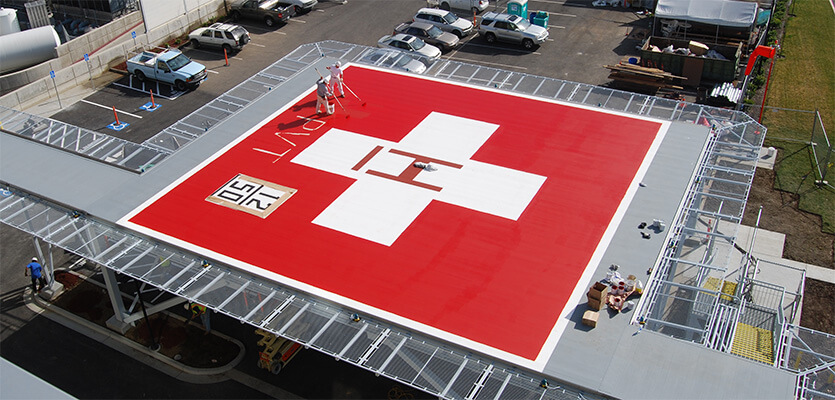
At FEC Heliports, we believe a well-designed helideck (otherwise known as a helipad or helicopter landing pad) is only as reliable as the maintenance behind it.
Whether it’s a hospital rooftop, a private facility, a parking garage, or a commercial heliport, regular upkeep plays a critical role in safety and compliance, as well as long-term performance. While much of the conversation around helidecks focuses on design and construction, maintenance is what ensures everything continues to function as intended—landing after landing.
Helicopter landing pad maintenance is the ongoing inspection, repair, and upkeep of lighting, markings, surface conditions, and structural components to ensure safe, efficient operations.
In this guide, we’ll walk through the essentials of helideck maintenance, including lighting, markings, inspections of fire suppression and snowmelt equipment and key safety considerations tied to both general and FAA helideck guidelines.
Why Helicopter Landing Pad Maintenance Matters
Routine maintenance goes beyond appearances. Proper management directly impacts safety and compliance. A poorly maintained helicopter landing pad can lead to a variety of costly issues such as:
- Reduced pilot visibility
- Increased risk during landing and takeoff
- Noncompliance with helicopter landing pad guidelines
- Expensive repairs or operational downtime
Even if your pad was built to precise helideck dimensions and specifications, normal wear and tear and environmental exposure can quickly degrade critical elements like lighting systems and surface markings.
Understanding Helicopter Landing Pad Guidelines
Before diving into maintenance tasks, it’s critical to understand the foundation: helicopter landing pad guidelines. If these aren’t properly addressed, the rest of your maintenance efforts will be compromised.
These guidelines typically cover:
- Proper helicopter landing pad size based on aircraft type
- Surface conditions and load-bearing capacity
- Clearly visible helideck markings
- Functional helideck lighting systems
- Safe approach and departure paths
In the U.S., many of these standards are guided by FAA helideck guidelines, which outline best practices for both ground-level and elevated heliports. Continuous maintenance ensures that your pad continues to meet these standards—not only at installation, but throughout its lifecycle.
Helideck Lighting: Inspection and Upkeep
One of the most critical components of any helicopter landing pad is its lighting system. These systems illuminate the pad and provide reliable visual guidance for pilots during approach, landing, and departure.
Why Helideck Lighting Matters
Proper helideck lighting is essential for safe and efficient operations, especially during nighttime operations and low-visibility conditions. A complete lighting system does more than illuminate the landing surface—it helps pilots safely identify the helideck, maintain orientation during approach and departure, and recognize surrounding obstacles that could affect flight operations.
Effective helideck lighting:
- Improves visibility during low-light or nighttime operations
Ensures the landing pad remains visible in darkness, fog, rain, or other reduced-visibility conditions. - Helps pilots identify landing zones quickly
Lighting systems like perimeter lights and heliport beacons make it easier to distinguish the pad from surrounding areas. - Enhances overall operational safety
Clearly defined landing zones reduce the risk of misalignment or missed approaches. - Supports spatial awareness during approach and descent
Helps pilots judge distance, orientation, and elevation more accurately. - Highlights nearby obstacles
Properly maintained obstruction lights identify nearby buildings, antennas, cranes, and other structures that could present hazards, particularly at rooftop or elevated helidecks. - Ensures compliance with aviation standards
Proper lighting helps meet FAA and industry guidelines, reducing risk and liability.
Helideck Lighting Maintenance Best Practices
To keep lighting systems functioning properly, it’s important to:
- Inspect lights regularly for damage or wear
- Replace burned-out bulbs or failing LEDs promptly
- Clean fixtures to remove dirt, debris, or buildup
- Check wiring and connections for corrosion or faults
If your system includes perimeter lights, floodlights, or heliport beacons, each element should be tested on a consistent schedule.
Overall, neglecting lighting maintenance can quickly make a landing pad unsafe, even if every other component is in good condition.
Helideck Markings: Visibility and Compliance
Clear, well-maintained helideck markings are nonnegotiable for safe navigation and accurate pilot decision-making. Markings help pilots confirm they’re aligned properly and landing in the correct location.
These markings typically include:
- The “H” identifier
Clearly designates the landing area - Optional Yellow Touchdown/Positioning Circle (TDPC)
Provides extra guidance for the pilot to center their landing over the load-bearing area of the helipad - Weight limits
Indicate the maximum safe load capacity for the pad - Directional indicators
Guide approach and departure paths - Safety boundaries
Define safe touchdown and clearance zones
Why Markings Degrade
Even high-quality helideck markings are exposed to constant environmental and operational stress, which can quickly impact visibility.
Over time, markings can fade due to:
- UV exposure
Sunlight breaks down paint pigments, reducing contrast. - Weather conditions
Rain, wind, and temperature fluctuations wear down surfaces. - Frequent landings
Rotor wash and repeated contact accelerate deterioration. - General wear and tear
Ongoing use gradually reduces sharpness and clarity.
Helideck Markings Maintenance Tips
Proactive maintenance helps ensure markings remain visible and compliant for pilots at all times. Here are a few tips to ensure yours stay in tip-top shape:
- Schedule routine visual inspections
Regular inspections help catch fading, chipping, or distortion early. - Repaint markings
Repaint as soon as visibility decreases to maintain clear recognition from the air. - Use high-quality, aviation-grade paint
This type of paint is designed for durability and high contrast. Note: Do not use reflective paint. - Ensure markings remain compliant
Compliance with FAA helideck guidelines will support safe operations.
Helideck Dimensions and Surface Integrity
Your original helipad dimensions and structure are designed for safety, but they must be preserved through proper maintenance. Even minor surface issues or changes to usable space can impact landing performance and pilot confidence.
Key Areas to Monitor
- Cracks or surface deterioration Repair promptly to maintain a stable, even landing surface.
- Drainage issues Ensure systems are functioning properly to prevent standing water and surface damage.
- Debris accumulation Keep the pad clear at all times to avoid hazards from rotor wash.
Routine Inspection Checklist
A proactive inspection routine helps prevent small issues from becoming major problems. Daily/pre-use checkups should be a key part of any well-rounded routine maintenance schedule, as well as monthly inspections and thorough annual reviews. Include tasks such as:
- Clear debris from the landing surface
- Confirm visibility of helideck markings
- Check basic lighting functionality
- Test all helideck lighting systems, including snowmelting and fire suppression, as applicable
- Inspect surface condition and drainage
- Evaluate paint and marking visibility
- Conduct a full compliance review against most current FAA helideck guidelines
- Upgrade or replace outdated components
Environmental and Operational Factors
Maintenance needs can vary based on both location and usage. Environmental conditions directly impact how quickly a helideck wears over time. Coastal areas may experience faster corrosion from salt air, while colder climates can lead to cracking from freeze-thaw cycles. High-traffic pads are also more prone to accelerated wear due to repeated landings and rotor wash.
Operational factors further influence maintenance demands. The frequency of landings, along with the type and size of aircraft, affects the level of stress placed on the surface and structure. Helidecks used for emergency or unscheduled operations may also require more consistent upkeep to remain ready at all times.
Understanding these factors allows you to tailor your maintenance plan to your specific helicopter landing pad, helping ensure long-term performance, safety, and compliance.
Common Maintenance Mistakes to Avoid
Even well-intentioned maintenance programs can fall short if key areas are overlooked. Avoiding these common mistakes can help reduce risk and prevent costly repairs:
- Skipping routine inspections
Without consistent checks, small issues like minor cracks or lighting inconsistencies can go unnoticed until they become larger, more expensive problems. - Ignoring lighting failures
Even a single nonfunctioning light can reduce visibility and disrupt a pilot’s ability to safely identify and approach the landing zone. - Delaying repainting
Faded helideck markings lose contrast and clarity, making it more difficult for pilots to quickly recognize boundaries and alignment from the air. - Overlooking compliance updates
FAA helideck guidelines can change over time, and failing to stay current may result in noncompliance or increased liability. - Treating maintenance as reactive
Waiting until something breaks instead of addressing issues early often leads to higher costs, more downtime, and greater safety risks.
Building a Long-Term Maintenance Plan
We believe the most effective approach to helicopter landing pad maintenance is always proactive. A strong plan goes beyond occasional repairs and focuses on consistency and long-term performance. This includes:
- Establishing a regular schedule for inspections
- Maintaining clear documentation of all maintenance activities
- Assigning defined responsibilities to ensure nothing is overlooked
It’s also important to allocate a dedicated budget for ongoing repairs, upgrades, and unexpected issues, so maintenance doesn’t get delayed due to cost concerns.
Over time, a well-structured maintenance plan not only improves safety and reliability but also helps extend the lifespan of your helideck—protecting your investment and ensuring it remains fully operational when it matters most.
FAQs About Helicopter Landing Pad Maintenance
How often should a helicopter landing pad be inspected?
Basic visual checks should be done daily or before use, while more detailed inspections should occur monthly and annually.
What are the most important parts of helideck maintenance?
The most critical elements involve helideck lighting, surface condition, and helideck markings, which keep landing areas safe for pilots and ground crews. This includes maintaining a stable, damage-free surface, ensuring lighting and electrical systems work properly, and keeping all markings clear and compliant with aviation standards.
Do FAA helideck guidelines apply to all landing pads?
Not always, but FAA helideck guidelines are widely used as a benchmark for safety and best practices—even for private or noncommercial pads.
How do I know if my helideck markings need to be repainted?
If markings are faded or hard to distinguish from the air, it’s time to repaint. Visibility is essential for safe landings.
What maintenance is required for helideck lighting?
Helidecks should be inspected regularly to ensure all fixtures are functioning properly. This includes testing lights, cleaning lenses, checking wiring, and replacing any burned-out bulbs or failing LEDs to maintain visibility and safety.
How can I ensure my helideck stays compliant with safety standards?
Regular inspections, proper documentation, proactive maintenance, and staying up to date with FAA helideck guidelines are key. Addressing issues early and following a structured maintenance plan helps ensure ongoing compliance and helps prevent small problems from becoming larger concerns.
Keeping Your Helideck Safe, Compliant, and Ready for Every Landing
A safe, compliant helicopter landing pad relies on consistent, proactive maintenance. From lighting and markings to surface integrity and routine inspections, every component plays a role in keeping your helideck operational and dependable.
By staying ahead of wear and addressing issues early, you not only improve safety but also extend the lifespan of your investment and reduce the risk of costly disruptions.
At FEC Heliports, we help ensure your helideck meets the highest safety and performance standards. Whether you need routine maintenance or repairs, our team is here to support you every step of the way. Contact us today to keep your helideck ready for every landing.