
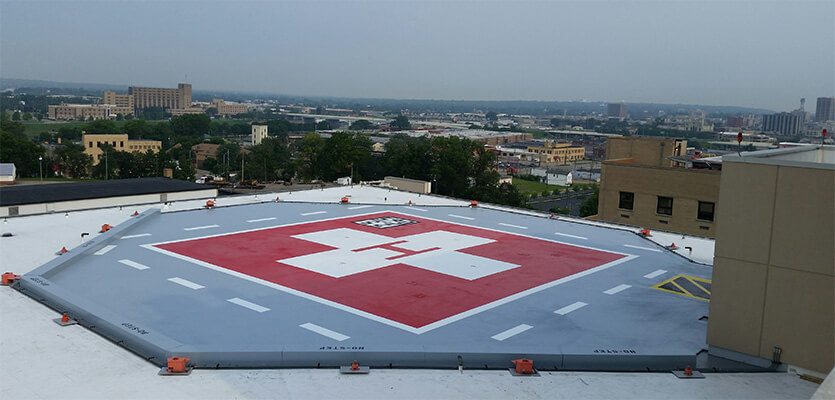
Concrete helipads are built to perform under pressure, but like any critical infrastructure, they don’t last forever. Over time, exposure to weather, repeated aircraft loads, and evolving industry best practices can leave even well-designed helipads showing signs of wear and tear. Cracking concrete, corrosion, outdated layouts, and operational concerns all point to the same question: Do you repair, rebuild, or rethink the structure entirely?
For many facility managers and property owners, full reconstruction feels like the only option. But today, there’s a smarter, more efficient alternative: aluminum helipad retrofits.
An aluminum helipad retrofit is the process of upgrading an existing concrete helipad using lightweight aluminum deck systems instead of full reconstruction.
By integrating modern aluminum deck systems into existing structures, it’s possible to extend your helipad’s life and improve performance without the cost and disruption of starting from scratch. In addition, FEC’s systems can provide the solution to a rooftop helipad that no longer meets clearance or weight requirements. Let’s take a look at the details and many benefits of a helipad retrofit.
What Is an Aluminum Helipad Retrofit?
An aluminum helipad retrofit involves upgrading an existing helipad by installing a lightweight aluminum decking system over or in place of the current surface. Rather than demolishing and rebuilding the entire structure, this approach focuses on enhancing what already exists.
Modern aluminum decks are engineered specifically for aviation environments. They offer:
- Lightweight to eliminate structural reinforcements
- Corrosion resistance
- Modular, prefabricated components
- Compatibility with a wide range of existing structures
Many systems (especially modular aluminum decking) can be customized to fit the exact dimensions and configuration of an existing helipad, making them ideal for retrofit applications. If your helipad surface is deteriorating your existing snowmelt system encased in concrete has failed, aluminum retrofitting is the solution.
The result is a modernized landing surface that improves safety and longevity without the complexity of full reconstruction.
The Challenges of Aging Helipad Infrastructure
Yes, aging helipads present a variety of cosmetic issues, but they can also introduce real operational and safety risks.
As time goes on, traditional materials like concrete are prone to:
- Surface cracking and structural fatigue
- Roofing material breakdown causing internal leaks
- Increased maintenance demands and costs
- Outdated layouts that no longer abide by modern helicopter landing pad design best practices
As these issues compound, surface deterioration can cause safety issues by blowing debris around during helicopter operations. Expansion and contraction of concrete due to weather conditions can shift the structure and cause internal snowmelting equipment to fail. These types of challenges can shut down helipad operations until a safe landing zone can be reestablished.
Why Aluminum Helideck Systems Are Ideal for Helipad Upgrades
Not all materials perform equally in high-demand helipad environments. Aluminum decks stand out for several key reasons.
1. Lightweight Without Compromising Strength
Traditional concrete helipads are heavy, placing significant stress on supporting structures. This is especially the case with rooftop applications.
In contrast, aluminum deck systems are significantly lighter while still delivering the structural integrity required for helicopter operations. This makes them particularly valuable when retrofitting older buildings that may not support additional weight.
2. Corrosion Resistance and Durability
Helipads are constantly exposed to the elements, including rain, snow, UV exposure, and even rotor wash. Each of these can contribute to significant wear over time.
Unlike steel, aluminum naturally resists corrosion, meaning aluminum surfaces never deteriorate. This reduces long-term helipad maintenance needs and helps preserve structural integrity, making it a reliable choice for rooftop retrofit installations.
3. Faster Installation with Less Disruption
Full helipad reconstruction can be extremely time-consuming and costly. It can also cause a variety of operational disruptions.
With modular aluminum decking, installation is faster and more efficient. Prefabricated components can be assembled on-site with minimal interruption to surrounding operations, which is an important consideration for hospitals, commercial buildings, industrial facilities, and select government sites.
4. Improved Drainage and Safety
Many aluminum helipad systems are designed with built-in drainage and slip-resistant surfaces that prevent standing water and reduce the risk of ice buildup. This proactive approach improves safety for both aircraft and personnel.
5. Adaptability to Modern Design Recommendations
As helipad design evolves, older structures may no longer comply with current best practices. Aluminum retrofit systems can be engineered to support updated layouts, markings, and safety features, bringing existing helipads in line with modern helicopter landing pad design expectations.
Retrofit vs. Full Reconstruction: Which Is Right for You?
When evaluating an aging helipad, the decision often comes down to two options: full reconstruction or retrofit. While full reconstruction may be necessary in cases of severe structural damage, many helipads are strong candidates for retrofit, especially when the underlying support structure remains sound.
Full reconstruction often involves complete removal and rebuild, higher upfront costs, longer project timelines, and greater operational disruption. Helipad retrofit projects focus on upgrading existing structures and tend to have lower overall costs and faster implementation with minimal disruption.
At the end of the day, a professional assessment is usually the best way to determine the best path forward based on your facility’s condition, usage, and long-term goals. If you need help making your decision, feel free to reach out to one of FEC’s experts by calling 513-577-5150 or emailing sales@fecheliports.com.
FAA Considerations for Helipad Retrofits
Compliance is a critical part of any helipad project, whether you’re upgrading or rebuilding. In either case, your helipad must align with applicable FAA helipad guidance related to:
- Load capacity
- Safety areas and clear zones
- Markings and lighting
- Surface conditions and friction
- Approach and departure paths
One of the key advantages of retrofitting with aluminum systems is the ability to integrate compliance upgrades directly into the helipad design. Rather than trying to adapt an outdated structure to current FAA guidelines, aluminum systems can be engineered from the start to align with current guidance, helping reduce risk and ensure long-term usability.
When Is a Helipad Retrofit the Right Choice?
Not every helipad needs to be rebuilt from the ground up. Oftentimes, the core structure remains intact, but the surface, materials, or design no longer meet current performance or safety expectations, making a full reconstruction unnecessary.
A retrofit may be the right solution if:
- The underlying structure is still sound
- Surface damage is the primary concern
- You need to reduce weight load on an existing building
- Your facility requires minimal downtime
- You want to modernize without major capital investment
- The internal snowmelt system has failed
In these circumstances, an aluminum helipad retrofit can help you avoid a full rebuild while delivering significant improvements to your existing structure.
The Long-Term Value of Aluminum Helipad Systems
Beyond immediate upgrades, aluminum systems offer long-term advantages that make them a smart, future-focused investment. For facility owners and operators, the benefits go well beyond the initial installation—impacting efficiency, maintenance, overall lifecycle value, and more.
Lower Lifecycle Costs
While upfront costs are always a consideration, the true value of a helipad lies in its long-term functionality. Aluminum systems are designed to reduce ongoing maintenance needs thanks to their natural corrosion resistance and durability in harsh environments. Unlike traditional materials that may require frequent repairs, resurfacing, or protective treatments, aluminum decking maintains its integrity over time, resulting in lower total cost of ownership and fewer unexpected expenses.
Future Flexibility
Operational needs can change, especially in industries like healthcare, energy, and commercial development. One of the key advantages of modular aluminum decking is its adaptability. In many cases, these systems can accommodate new aircraft types or be reconfigured as layouts and operational needs shift, though the extent of expansion depends on the site and existing structure. This flexibility helps ensure your helipad remains functional and relevant without requiring a complete overhaul down the line.
Sustainability
Sustainability is becoming an increasingly important factor in infrastructure decisions. Aluminum is highly recyclable and can often be repurposed at the end of its lifecycle, reducing environmental impact. Additionally, the longevity and low maintenance of aluminum systems contribute to fewer material replacements and less resource consumption over time, supporting more sustainable construction and facility management practices.
Consistent Performance Over Time
Another important (but often overlooked) benefit is performance consistency. Aluminum helipad systems are engineered to maintain their structural and surface properties even after years of use and exposure. This means more reliable traction, drainage, load capacity, and more, which all contribute to safer, more predictable operations for pilots and ground crews.
Together, these advantages make aluminum helipad systems a long-term solution designed to support safety, efficiency, and adaptability well into the future.
Quick FAQs About Aluminum Helipad Retrofits
What is an aluminum helipad?
An aluminum helipad is a landing surface constructed using lightweight, high-strength aluminum decking systems. These systems are designed to support helicopter operations while offering durability, corrosion resistance, reduced structural load, and lower maintenance demands.
How does a helipad retrofit differ from a rebuild?
A helipad retrofit upgrades an existing structure (typically by replacing or overlaying the surface) while a rebuild involves complete demolition and reconstruction. Retrofits are often faster, more cost-effective, less disruptive, and easier to implement.
Are aluminum decks strong enough for helicopters?
Yes. Modern aluminum deck systems are engineered for demanding aviation load conditions and are widely used in aviation applications. They provide a strong, reliable surface while remaining significantly lighter than traditional materials.
Can aluminum helipad retrofits meet FAA expectations?
Absolutely. When properly designed, aluminum retrofit systems can be designed in accordance with modern FAA guidelines and other relevant recommendations for safety, load capacity, surface operation, etc.
How long does it take to retrofit a helipad?
Project timelines vary based on size and complexity, but retrofits are generally much faster than full reconstruction. This often reduces downtime and minimizes disruption to operations.
Upgrade Your Helipad with Confidence
Aging infrastructure doesn’t have to mean starting over. With the right approach, you can extend the life of your helipad, improve safety, and ensure compliance and not worry about the cost and complexity of a full rebuild.
Successful retrofits rely on careful engineering and a strong understanding of heliport operations. Every detail matters when it comes to long-term effectiveness and safety.
That’s why working with an experienced partner is critical. The right team ensures your retrofit solution is:
- Structurally sound
- Fully compliant
- Optimized for efficiency
- Tailored to your facility’s needs
At FEC, we specialize in designing and delivering advanced aluminum helipad solutions engineered with these priorities in mind. Our systems use high-strength 6000 series aluminum to provide the structural integrity of traditional materials without the added weight or ongoing maintenance. The result is a lightweight, corrosion-resistant solution that performs reliably in demanding environments, from rooftop installations to remote sites.
From initial assessment to final installation, our team helps you navigate every step of the retrofit process with confidence. Ready to upgrade your helipad? Contact FEC today to explore a safer, lower-maintenance solution built to last.