
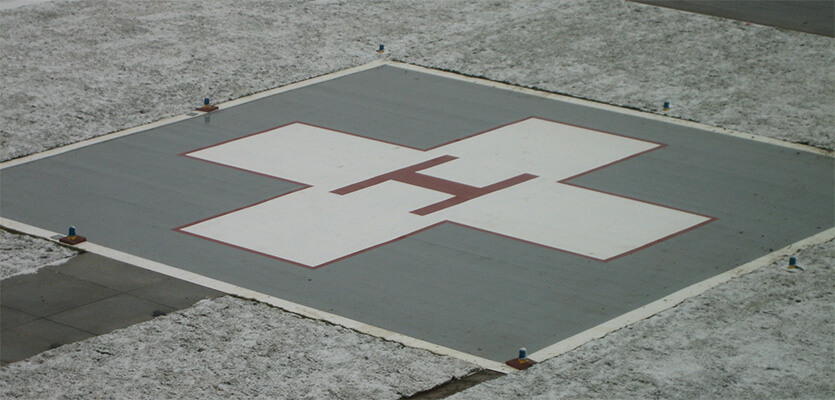
Winter brings unique challenges for helipads and heliports, especially for hospitals, corporate facilities, and emergency service operators. Snow and ice accumulation can compromise helicopter safety, reduce operational reliability, and create hazards for ground crews. In critical environments—where every minute counts—delays or interruptions in helicopter operations can have serious consequences.
In our first snowmelt blog, we explored the fundamentals of snowmelt systems—what they are, how they work, and the types available. Here, we take a closer look at why snowmelt is so important, highlighting its impact on safety, operational reliability, FAA guidance alignment, and real-world applications.
The Impact of Snowmelt Systems On Helipad Safety
Snow and ice are more than a nuisance—they’re serious operational hazards. Even a thin layer of snow can reduce traction, affect rotor clearance, and interfere with load distribution during landing or takeoff. Ice buildup can create uneven surfaces, compromising helicopter stability and the safety of ground personnel.
But we can prevent these hazards, thanks to snowmelt systems. These systems keep helipads consistently clear of snow and ice, providing automated, reliable protection that temporary or manual solutions simply can’t match. This reliability directly supports helicopter safety by ensuring every landing surface meets operational criteria, no matter the weather.
Beyond physical safety, snowmelt systems also enhance aviation risk management. Hospitals and emergency operators can’t afford delays in winter. By keeping helipads fully operational, these tools reduce the likelihood of canceled or postponed flights, which is critical for patient care and emergency response.
Enhancing Winter Operational Reliability
For hospital, corporate, and utility helipads, operational reliability is a must. Snowmelt systems provide automated snow and ice management, keeping landing surfaces functional without constant manual intervention.
Some operational benefits include:
- Uninterrupted flight operations: Automated systems maintain landing surfaces, ensuring emergency flights, corporate travel, and critical services continue even during heavy snowfall.
- Rapid response: Systems react to temperature and moisture changes, quickly melting snow and preventing ice before it becomes hazardous.
- Reduced downtime: With snow and ice consistently managed, helipads stay operational throughout the winter season, minimizing delays that can impact patient care, corporate travel, or emergency response.
- Enhanced ground crew safety: Clear surfaces reduce slip and fall risks for personnel and maintenance teams.
- FAA compliance support: Consistently safe landing areas help helipads meet FAA helipad requirements.
- Predictable operations: Automated management allows facility managers to plan and schedule flights with confidence, knowing winter weather won’t cause unexpected delays.
As you can see, investing in a snowmelt system is a strategic choice for operators who want both safety and operational efficiency.
Snowmelt Systems and FAA Guidance Alignment
Winter conditions should never compromise compliance. Helipads must meet FAA helipad requirements, including surface design, slope, and operational safety considerations. This requires:
- Maintaining clear landing surfaces: Automated snow and ice management keeps helipads meeting safety standards at all times.
- Supporting structural and operational criteria: Systems integrate seamlessly with various pad materials and sizes while following FAA-recommended surface and slope guidelines.
- Enhancing overall aviation safety: Clear surfaces reduce operational risks and support safe helicopter landings, takeoffs, and ground crew activities.
At FEC, we implement these systems to ensure that helipad operations remain compliant with FAA guidance—even in the harshest winter conditions.
Strategic Benefits Beyond Safety
Snowmelt systems deliver operational and financial advantages that go far beyond safety. They also provide:
- Labor and maintenance reduction: This reduces the need for manual snow removal, chemical de-icing, and constant inspections.
- Preservation of surface integrity: Limiting plow and chemical use extends the life of helipad materials.
- Energy efficiency and cost management: Modern systems activate only when needed, optimizing energy use while maintaining operational reliability.
- Enhanced planning and risk management: Reliable winter operations allow for better forecasting and planning for hospital, corporate, and emergency flights.
These additional advantages help operators manage costs while maintaining the highest standards of safety and operational excellence.
Operational Impact of Snowmelt Across Key Sectors
The benefits of snowmelt systems keep surfaces clear and directly affect how helipads operate during winter conditions. Here’s how we see the impact across different sectors:
- Hospitals: By keeping hospital helipads free of snow and ice, snowmelt systems ensure medevac flights and emergency transport can continue without interruption, even during heavy snowfall. Every minute counts when lives are on the line.
- Corporate and Hotel Helipads: Automated snow and ice management reduces the risk of flight cancellations or delays, keeping executive and guest travel on schedule.
- Emergency Response and Search & Rescue: Reliable helipads allow teams to deploy quickly during critical missions, minimizing downtime caused by winter weather.
- Utility and News Operations: Snowmelt systems support time-sensitive operations, helping crews and reporters reach essential sites safely and efficiently.
- Military and Offshore Applications: For military sites, this means supporting routine training flights, equipment transport, and personnel movements without weather-related delays. For offshore pads, systems help maintain safe landings for maintenance crews, supply deliveries, or emergency evacuations
By focusing on operational outcomes, these systems demonstrate clear value in safety, reliability, and compliance, making them an essential investment for any helipad that operates in winter conditions.
Planning for Snowmelt System Implementation
Implementing a snowmelt system requires careful planning that involves careful consideration of:
- Helipad Size and Usage: Larger or high-traffic pads need systems capable of consistently managing snow and ice.
- Local Climate Conditions: Regions with heavy snowfall or prolonged cold benefit most from robust automated systems.
- FAA Guidance Alignment: Systems must support FAA-aligned surfaces to maintain operational safety.
- Integration with Existing Infrastructure: Snowmelt systems complement lighting, approach aids, and other equipment.
- Energy Efficiency and Sustainability: Advanced controls allow precise activation, minimizing energy use while ensuring reliability.
Thoughtful planning ensures facilities get maximum safety, operational efficiency, and risk mitigation from their snowmelt systems. The team at FEC streamlines the planning process by evaluating site conditions, airspace requirements, and regulatory needs to ensure seamless integration with the helipad. With in-house design-build services and accurate budgetary pricing, we help operators plan confidently and avoid surprises.
FAQs About Snowmelt Systems
How do snowmelt systems improve helicopter safety?
They prevent snow and ice buildup, maintaining stable, clear surfaces, which directly supports aviation risk management and helicopter safety.
How quickly do snowmelt systems start working once snow begins to fall?
Most snowmelt systems activate automatically as soon as sensors detect moisture and freezing temperatures. Instead of waiting for snow to accumulate, they turn on early to prevent buildup from forming in the first place. In most cases, the system begins warming the surface within minutes, keeping the helipad clear for the duration of the snowfall.
Can snowmelt systems be added to an existing helipad, or only new builds?
Snowmelt can be integrated into both. Adding a system to an existing rooftop helipad or ground-level helipad is often possible, but it depends on factors like the pad’s structure, access to utilities, and how the surface was originally built. New builds offer the most flexibility, but with proper planning and evaluation, retrofits can be done safely and effectively.
What are the operational benefits of installing a snowmelt system?
Snowmelt systems reduce downtime by keeping the helipad clear without constant manual intervention, and they react quickly to changing weather so snow and ice never get a chance to build up. This helps maintain helicopter safety, supports FAA helipad requirements, and keeps emergency, corporate, and critical flights running without interruption. Clear surfaces also protect ground crews, prevent surface damage, and give operators more predictable, reliable winter operations.
Which industries benefit most from snowmelt systems?
Hospitals, corporate, search and rescue, news, utility, and military or offshore helipads all gain operational and safety advantages from snowmelt systems.
Do snowmelt systems support compliance and aviation risk management?
Yes. By keeping surfaces consistently snow-free and aligned with FAA-related guidance, snowmelt systems help facilities reduce operational risks and maintain safe, compliant helipad conditions.
Safer, Weather-Proof Helipads Start Here
Winter helipad operations require resilient, automated solutions to ensure helicopter safety, operational continuity, and FAA-aligned compliance. Snowmelt systems are a critical part of that strategy, providing automated snow and ice management, reducing operational risks, and enhancing winter reliability.
At FEC Heliports, we design customized snowmelt systems that keep helipads operational and safe all season long. Contact us today to learn how we can support your winter-weather needs and ensure dependable helipad operations.